





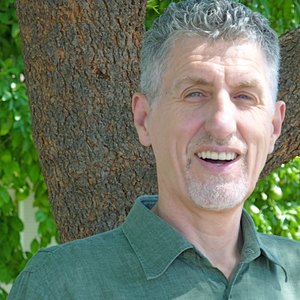
Doug Kenrick
Professor Kenrick's current research interests focus mainly on questions related to evolutionary social cognition (e.g., how attention, encoding, and memory for other people is influenced by fundamental human goals), as well as exploring links between evolutionary psychology and dynamical systems perspectives (e.g., how cultural norms emerge from individuals acting on evolved decision-rules).
Primary Interests:
- Aggression, Conflict, Peace
- Close Relationships
- Culture and Ethnicity
- Evolution and Genetics
- Gender Psychology
- Helping, Prosocial Behavior
- Interpersonal Processes
- Motivation, Goal Setting
- Social Cognition
Research Group or Laboratory:
Note from the Network: The holder of this profile has certified having all necessary rights, licenses, and authorization to post the files listed below. Visitors are welcome to copy or use any files for noncommercial or journalistic purposes provided they credit the profile holder and cite this page as the source.
Image Gallery


Video Gallery

Sex, Murder and Self-Actualization (TEDx talk)
Select video to watch
-
18:00 Sex, Murder and Self-Actualization (TEDx talk)
Length: 18:00
-
3:30 Sex, Murder, and the Meaning of Life
Length: 3:30
-
3:45 What Do Sex and Murder Have to Do with the Meaning of Life?
Length: 3:45
-
2:01 On the Science of Anti-Science Thinking
Length: 2:01
-
1:25:10 Evolved Psychology Versus the Modern World
Length: 1:25:10
-
2:14:52 Solving Modern Problems with a Stone-Age Brain
Length: 2:14:52
-
1:27:04 How to Climb the Pyramid of Life (Humanist Society)
Length: 1:27:04
-
4:52 Five Questions About the World After COVID-19
Length: 4:52
-
5:16 ASU President's Professor Acceptance Speech
Length: 5:16
-
1:06:26 The Rational Animal: How Evolution Made Us Smart Than We Think
Length: 1:06:26
-
23:26 How the Mind Warps: Evolution and Social Cognition
Length: 23:26
-
1:17:47 Can Evolution Explain Everything? (unSILOed Podcast)
Length: 1:17:47
-
45:35 On Solving Modern Problems with a Stone-Age Brain
Length: 45:35
-
2:05:10 Ancient Brains, Modern Times (Converging Dialogues)
Length: 2:05:10
Additional Videos
Books:
- Kenrick, D. T., & Griskevicius , V. (2013). The rational animal: How evolution made us smarter than we think. New York: Basic Books.
- Kenrick, D. T., Goldstein, N., & Braver, S. L. (Eds.). (2012). Six degrees of social influence: science, application, and the psychology of Robert Cialdini. New York: Oxford University Press.
- Kenrick, D. T., Neuberg, S. L., Cialdini, R. B., & Lundberg-Kenrick, D. (2021). Social psychology: Goals in interaction (7th ed.). Hoboken, NJ: Pearson.
- Simpson, J. A., & Kenrick, D. T. (Eds.). (1997). Evolutionary social psychology. Mahwah, NJ: Lawrence Erlbaum Associates.
Journal Articles:
- Ackerman, J. M., & Kenrick, D. T. (2008). The costs of benefits: Help-refusals highlight key trade-offs of social life. Personality & Social Psychology Review, 12, 118-140.
- Ackerman, J., Shapiro, J. R., Neuberg, S. L., Kenrick, D. T., Schaller, M., Becker, D. V., Griskevicius, V., & Maner, J. K. (2006). They all look the same to me (unless they’re angry): From out-group homogeneity to out-group heterogeneity. Psychological Science, 17, 836-840.
- Becker, D. V., Kenrick, D. T., Neuberg, S. L., Blackwell, K. C., & Smith, D. M. (2007). The confounded nature of angry men and happy women. Journal of Personality & Social Psychology, 92, 179-190.
- Griskevicius, V., Goldstein, N., Mortensen, C., Cialdini, R. B., & Kenrick, D. T. (2006). Going along versus going alone: When fundamental motives facilitate strategic (non)conformity. Journal of Personality & Social Psychology, 91, 281-294.
- Kenrick, D. T., & Keefe, R. C. (1992). Age preferences in mates reflect sex differences in human reproductive strategies. Behavioral & Brain Sciences, 15, 75-133.
- Kenrick, D. T., Griskevicius, V., Sundie, J. M., Li, N. P., Li, Y. J., & Neuberg, S. L. (2009). Deep rationality: The evolutionary economics of decision-making. Social cognition, 27, 764-785. (special issue on the rationality debate)
- Kenrick, D. T., Li, N. L., & Butner, J. (2003). Dynamical evolutionary psychology: Individual decision rules and emergent social norms. Psychological Review, 110, 3-28.
- Kenrick, D. T., Maner, J. K., Butner, J., Li, N. P., Becker, D. V., & Schaller, M. (2002). Dynamical evolutionary psychology: Mapping the domains of the new interactionist paradigm. Personality & Social Psychology Review, 6, 347-356.
- Kenrick, D. T., Neuberg, S. L., Zierk, K., & Krones, J. (1994). Evolution and social cognition: Contrast effects as a function of sex, dominance, and physical attractiveness. Personality & Social Psychology Bulletin, 20, 210-217.
- Kenrick, D. T., Sundie, J. M., Nicastle, L. D., & Stone, G. O. (2001). Can one ever be too wealthy or too chaste? Searching for nonlinearities in mate judgment. Journal of Personality & Social Psychology, 80, 462-471.
- Li, N. P., & Kenrick, D. T. (2006). Sex similarities and differences in preferences for short-term mates: What, whether, and why. Journal of Personality & Social Psychology, 90, 468-489.
- Maner, J. K., Kenrick, D. T., Becker, D. V., Robertson, T. E., Hofer, B., Neuberg, S. L., Delton, A. W., Butner, J., & Schaller, M. (2005). Functional projection: How fundamental social motives can bias interpersonal perception. Journal of Personality & Social Psychology, 88, 63-78.
Other Publications:
- Kenrick, D. T. (1994). Evolutionary social psychology: From sexual selection to social cognition. In M. P. Zanna (Ed.), Advances in Experimental Social Psychology (Vol. 26, pp. 75-121). San Diego, CA: Academic Press.
- Kenrick, D. T., Nieuweboer, S., & Buunk, A. P. (2010). Universal mechanisms and cultural diversity: Replacing the blank slate with a coloring book. In M. Schaller, A. Norenzayan, S. Heine, T. Yamagishi, & T. Kameda (Eds.), Evolution, culture, and the human mind (pp. 257-271). Mahwah, NJ: Lawrence Erlbaum Associates.
Courses Taught:
- Advanced Social Psychology
- Discovery of Human Nature
- Evolutionary Psychology
- Social Psychology
Doug Kenrick
Department of Psychology
Arizona State University
Box 871104
Tempe, Arizona 85287-1104
United States of America
- Phone: (480) 965-7249
